Industrial PhD - Picosecond Pulse Sources for Quantum-Dot Excitation (PULSE-Q)
At Phanofi, we are developing next-generation photonic integrated circuits that power AI infrastructure, datacentres, and quantum communication systems. We are looking for a highly motivated Industrial PhD candidate to join the PULSE-Q project, a 3-year research collaboration between Phanofi and The Technical University of Denmark (DTU) Department of Electrical and Photonics Engineering (DTU Electro), co-funded by Innovation Fund Denmark.
As an Industrial PhD researcher, you will work at the intersection of integrated photonics, quantum technologies, and ultrafast optics. You will help develop compact photonic-chip-based picosecond pulse sources for quantum-dot excitation, enabling scalable quantum technology. This role offers a unique opportunity to combine academic research with real-world product development while working closely with leading researchers and industry experts.
The position is open to both national and international applicants.
About the Project
Quantum dot based single photon sources require highly controlled optical pulses with picosecond pulse durations for efficient single-photon generation. The PULSE-Q project aims to develop a compact, tunable, chip-integrated picosecond pulse source built on state-of-the-art photonic integrated circuit (PIC) technology. Existing solutions are often expensive, bulky, or difficult to integrate. In this project, you will investigate and advance Phanofi's pulse source to enable compact, low-cost, and scalable photonic pulse sources suitable for future quantum systems.
What You'll Be Doing
Photonic Design & Simulation: Design and simulate novel photonic components and integrated photonic building blocks using photonic simulation tools and analytical modelling techniques.
PIC Development: Develop PICs that are compatible with UV-lithography methods and enable scalable production. Investigate alternative integrated-photonics material platforms for high-performance PICs.
Fabrication & Tape-out: Prepare fabrication-ready mask layouts and collaborate closely with DTU Nanolab during chip fabrication and process development.
Characterization & Testing: Perform optical and electrical characterization of fabricated devices, including optical transmission measurements, and RF characterization, and, thermal tunability analysis
Pulse Source Development: Design, build, and characterize pulsed laser systems for O-band, C-band, and NIR operations. Support PCB design and FPGA development activities for pulse source system.
Innovation: Investigate novel pulse generation concepts and explore their applications in quantum technology and ultrafast photonics.
Scientific Dissemination: Publish research findings in leading journals and present results at international conferences such as CLEO, SPIE Quantum West, and ECOC.
What We Offer
A Unique Research Environment
Fully funded Industrial PhD position enrolled at DTU
60% of your time at Phanofi and 40% at DTU Electro
Daily exposure to both academic research and industrial product development
Access to advanced photonics and optoelectronics laboratories
Professional Growth
30 ECTS PhD coursework at DTU
Close mentorship from leading experts in photonics and quantum technologies
Experience contributing to patents, publications, and commercialization activities
Salary and appointment terms
The successful candidate is expected to start on 1 October 2026. We offer a competitive industrial PhD salary based on the candidate’s relevant level of seniority.
Further information
The successful candidate will split their working time between two sites in Lyngby, approximately 16 km north of Copenhagen: DTU Electro and Phanofi at DTU Science Park in Lyngby. Copenhagen is an international and welcoming city where English is widely spoken, offering a rich variety of cultural, social, and recreational opportunities. Denmark is also known for its excellent quality of life and high living standards.
Applicants relocating from abroad can find practical information about living and working in Denmark through DTU’s relocation resources at https://www.dtu.dk/english/about/job-and-career/moving-to-denmark. Additional information about DTU Electro is available at https://electro.dtu.dk/.
Who We're Looking For
Please note: This position is governed by the Industrial PhD rules of Innovation Fund Denmark, and only candidates who meet the formal requirements can be considered.
Education & Academic Performance: MSc degree (120 ECTS) in Photonics, Physics, Electrical Engineering, Applied Physics, or a related field, or close to completion. Candidates with a Danish degree must have a combined Bachelor’s and Master’s weighted average of at least 10 (7-point scale) or a Master’s weighted average of at least 10. Candidates with a non-Danish degree must be able to document that they ranked within the top 10% of their year group based on their combined Bachelor’s and Master’s studies. Applicants are also required to submit their original academic transcripts together with a conversion of their grades to the Danish grading scale. Please follow the DTU grade conversion template available here: https://www.dtu.dk/english/education/graduate/admission-and-deadlines/application_procedure/before-you-apply/grade-translation.
Integrated Photonics Expertise: Strong foundation in photonic integrated circuits, semiconductor physics, quantum optics, and nanophotonics.
Simulation Skills: Experience with Python-based photonic design and simulation tools or commercial tools such as Lumerical, COMSOL, or equivalent.
Experimental Mindset: Interest in hands-on laboratory work, optical measurements, device characterization, and data analysis.
Research Capability: Ability to independently drive complex research projects, solve technical challenges, and translate ideas into practical solutions.
Scientific Communication: Strong written and verbal communication skills with the ability to publish scientific papers and present technical work to both academic and industry audiences.
Bonus Skills: Experience with RF electronics and FPGA programming is a plus, though not required.
Team Player: You thrive in a collaborative environment spanning academia and industry, and enjoy working closely with researchers, engineers, and entrepreneurs to push the boundaries of photonic technology.
Publications & Professional Experience
Publications or professional experience intended to serve as compensatory factors must be clearly documented in the candidate’s CV. The application must also include a brief statement describing the academic relevance and reputation of the journals or conferences where the work was published.
All documentation must comply with the Innovation Fund Denmark Industrial PhD guidelines, including grade conversion forms where applicable. Candidates who do not meet these requirements cannot be enrolled in the programme, regardless of professional experience or achievements.
Expected Outcomes
During the project, you will have the opportunity to contribute to multiple peer-reviewed publications in leading journals and help shape future quantum photonic technologies. Generate patent ideas and work closely with product development team for innovating next generation products.
Application Process
Applications must be submitted by 31 August 2026, 23:59 (Copenhagen time).
A complete application should include:
A one-page cover letter explaining the motivation for applying.
A current CV.
Documentation demonstrating eligibility for the Industrial PhD programme (see requirements above).
Official transcripts and degree certificates for Bachelor's and Master's studies.
A completed grade conversion showing the equivalent Danish grading scale (available in the programme guidelines). Please follow the DTU grade conversion template available here: https://www.dtu.dk/english/education/graduate/admission-and-deadlines/application_procedure/before-you-apply/grade-translation.
Contact details (name, affiliation, email address, and phone number) for at least one, and preferably two, academic references who can assess suitability for a PhD position.
IMPORTANT: Save all of documents needed as a single PDF file and upload it in the "Attach your resume" section.
Applications are welcomed from qualified candidates of all backgrounds, regardless of age, gender, ethnicity, disability, religion, or other personal characteristics.
Supervision Team
You will work closely with:
Dagmawi A. Bekele - Company Supervisor
Hitesh Kumar Sahoo - Company Co-Supervisor
Jesper Mørk - University Supervisor
Meng Xiong - University Co-Supervisor
About Phanofi
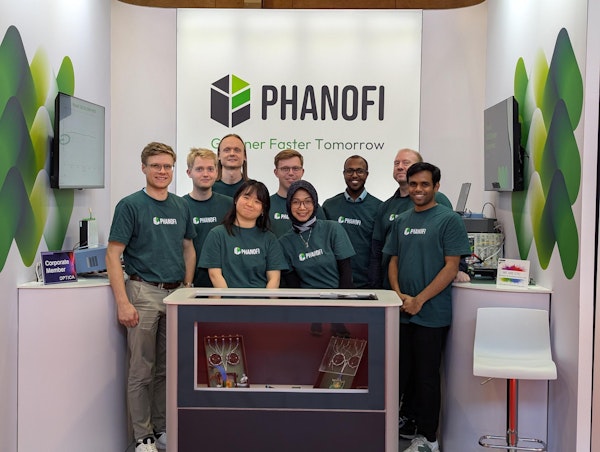
Phanofi is a deep-tech spin-out from DTU developing advanced photonic and electronic integrated circuits for AI infrastructure and quantum communication. we combine world-class research with ambitious product development to create high-speed, energy-efficient optical connectivity solutions. Our team works across photonics, electronics, and quantum technologies, collaborating with leading research institutions, foundries, and industry partners across Europe, and overseas.
About DTU Electro
At DTU Electro, more than 300 researchers work across electrical engineering and photonics to develop technologies that support sustainable energy, greener digital infrastructure, stronger cybersecurity, and advances in health technology. The department places a strong emphasis on collaboration with industry and public organizations to transform research into practical solutions that address real-world challenges. Through high-quality education, research, and innovation, DTU Electro promotes application-driven research that spans multiple disciplines, including information technology, engineering, and health sciences. The department maintains close partnerships with leading researchers, companies, and public authorities worldwide to advance solutions enabled by electrical and photonics technologies.
About DTU
Technical University of Denmark is one of Europe’s leading technical universities, recognized for its world-class research, education, and innovation. Since its founding in 1829 by Hans Christian Ørsted, DTU has been dedicated to creating value through science and technology for the benefit of society. Today, the university is home to approximately 13,800 students, 1,600 PhD candidates, and 6,500 employees. DTU offers an international, collaborative, and inclusive work environment, with campuses located throughout Denmark and in Greenland. Through partnerships with leading universities, research institutions, and industry partners worldwide, DTU contributes to solving global challenges and advancing sustainable technological development.
Perks and benefits
This job comes with several perks and benefits

Work life balance

Near public transit

Gym access

Paid holiday

Maternity / paternity leave

Free coffee / tea
Working at
Phanofi